At the core of every Syntropic product is Sodium-Chromium-Oxide, or NCO — a sodium-ion chemistry that behaves like no battery you’ve met. It cools itself as it charges, holds its efficiency under real work, and is designed to outlast the projects it powers. The same cells, from a home on backup to a grid at full duty.
Tenet™ is leading sodium-ion into the U.S. residential storage market, with select light-commercial applications supported through parallel scalability.
Planned Pillar48™ and PillarX™ solutions will extend the portfolio into telecom and C&I.
Built from third-party tested NCO cells with proven thermal stability.
Lower-risk materials with U.S.-based engineering and technical support.
Third-party validation and standards-aligned evidence to support review by AHJs, insurers, lenders, and procurement teams.
GridSpan™
Product
Architecture
Cell
NCO cell platform
GridSpan energy: 210 Ah
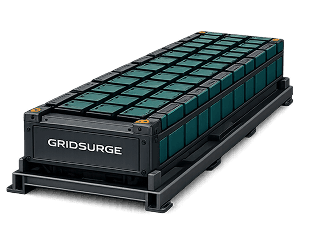
GridSurge power: 70 Ah
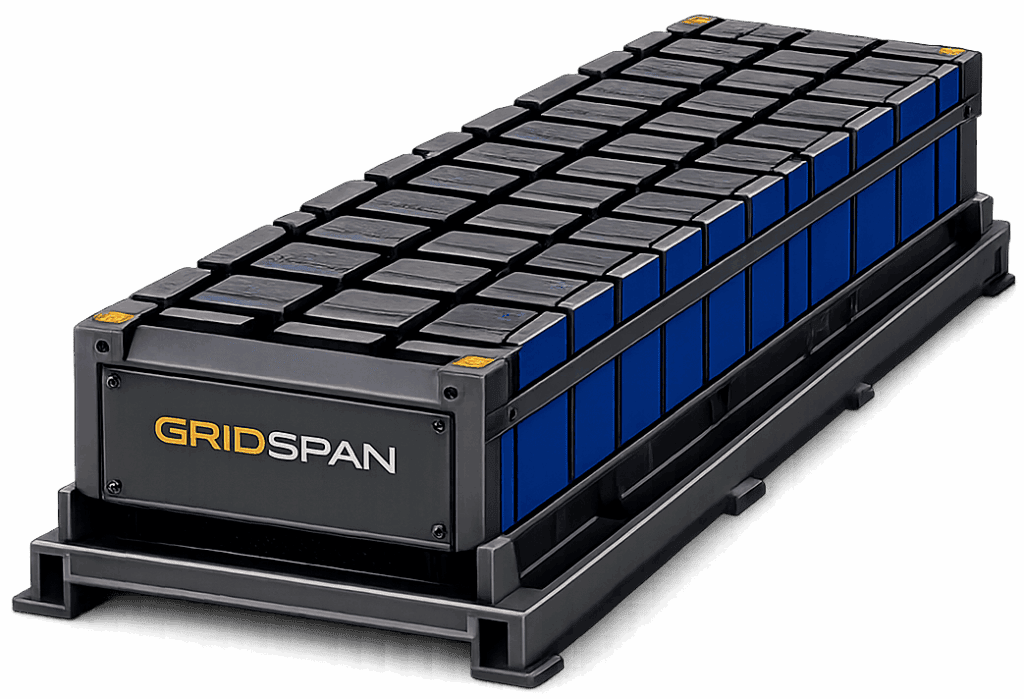
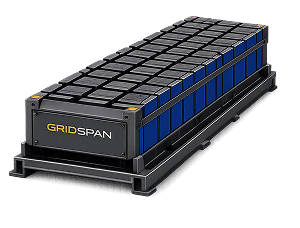
GridShelf
Modular battery shelf
Approx. 68 kWh nominal energy capacity
Configurable for energy or power applications
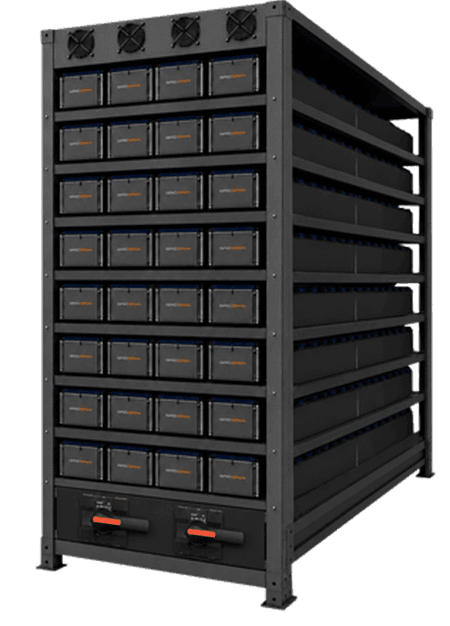
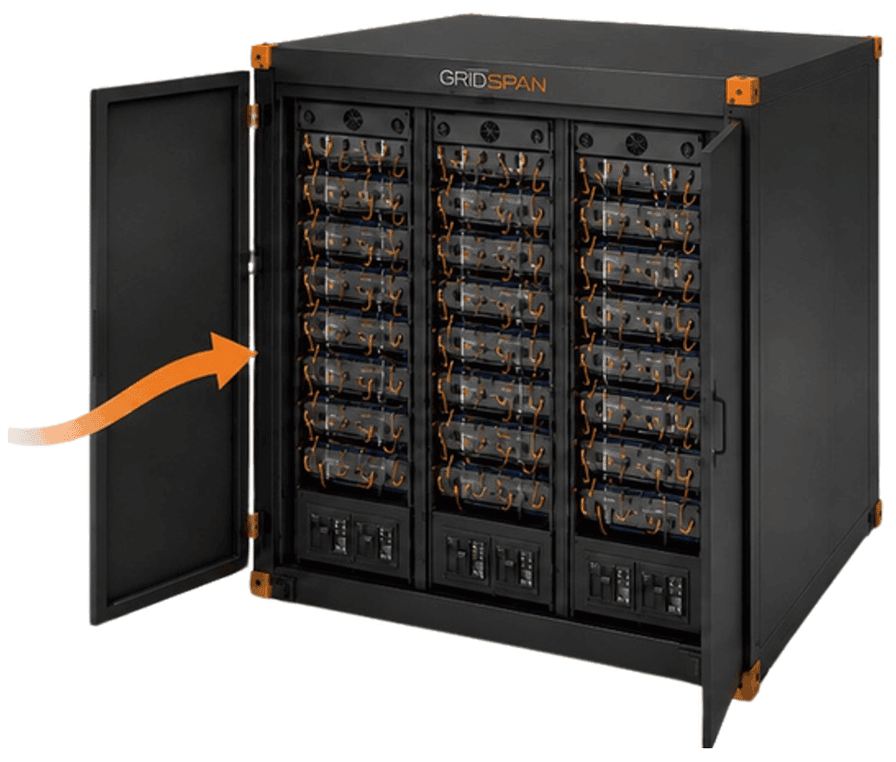
GridSpan Rack
Rack-level building block
8 shelves per rack
Approx. 540 kWh nominal energy capacity
GridSpan System
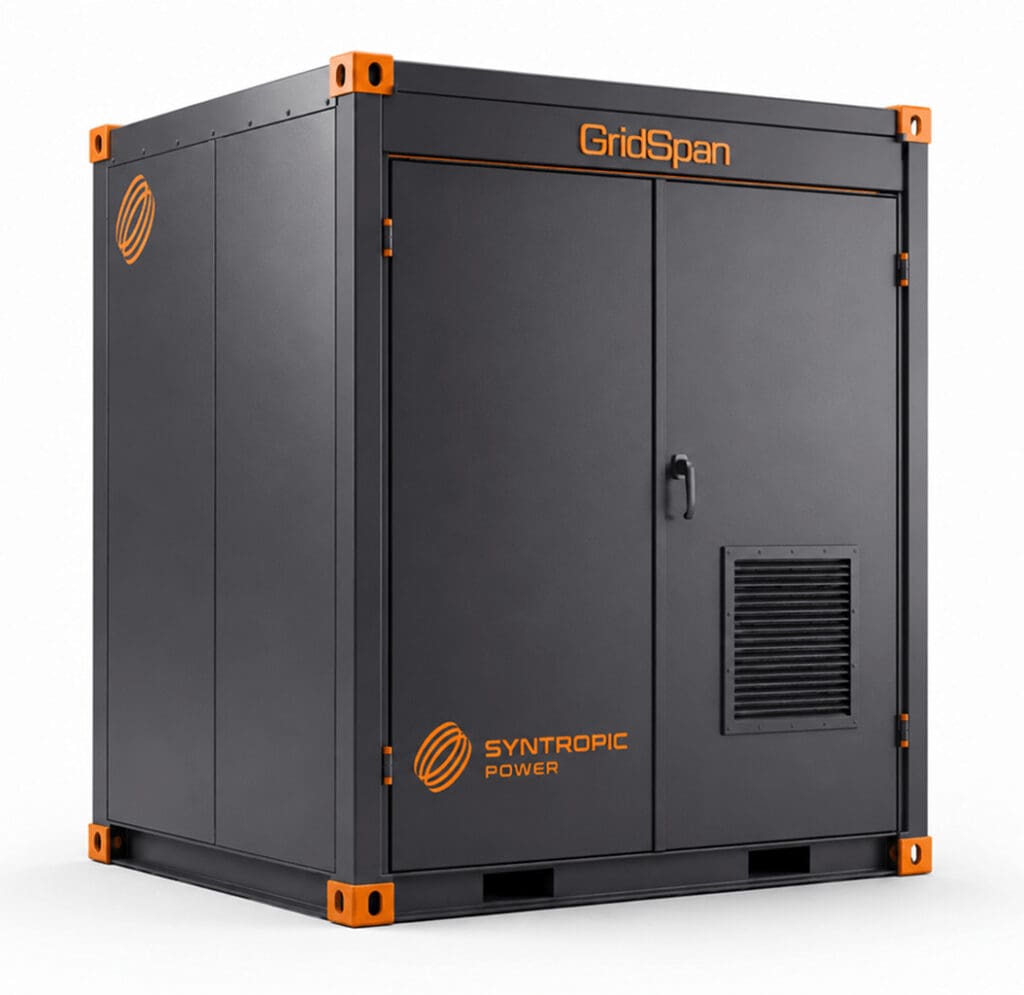
Outdoor GridSpan enclosure
3 racks per unit
Approx. 1.5 MWh energy capacity
Approx. enclosure dimensions: 8 ft W x 10 ft H x 8 ft D
Swappable shelf configuration
GridShelf
Energy configuration
GridSurge
Power configuration
Deployment Advantages
Purpose-built for the gaps where commodity storage falls short
Safer Chemistry
Sodium chromium oxide (NaCrO2 / NCO) chemistry and stable thermal behavior support safer siting and reduced mitigation burden.
Validation Pathway
Independent testing and standards-aligned certification work give AHJs, insurers, lenders, and procurement teams clearer evidence.
Supply Confidence
Dedicated cell supply, traceable sourcing, and a clear path toward non-FEOC alignment.
Standardized platform
Modular DC architecture supports repeatable configurations, serviceability, and more predictable deployment.
U.S.-based execution
Domestic assembly, integration, engineering, and support for utility-scale systems. U.S. manufacturing and portfolio-wide non-FEOC alignment targeted by year-end 2027.
The Key Enabler
Advanced sodium-ion, without the usual sodium tradeoffs
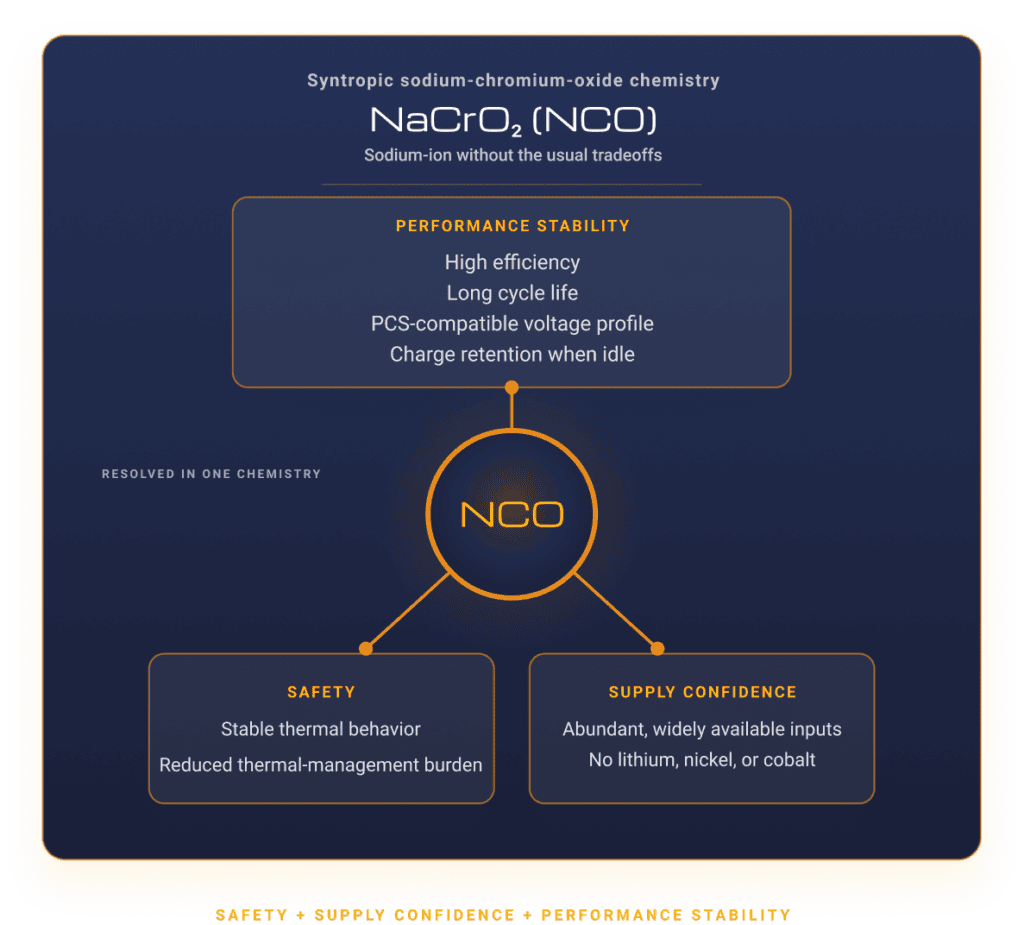
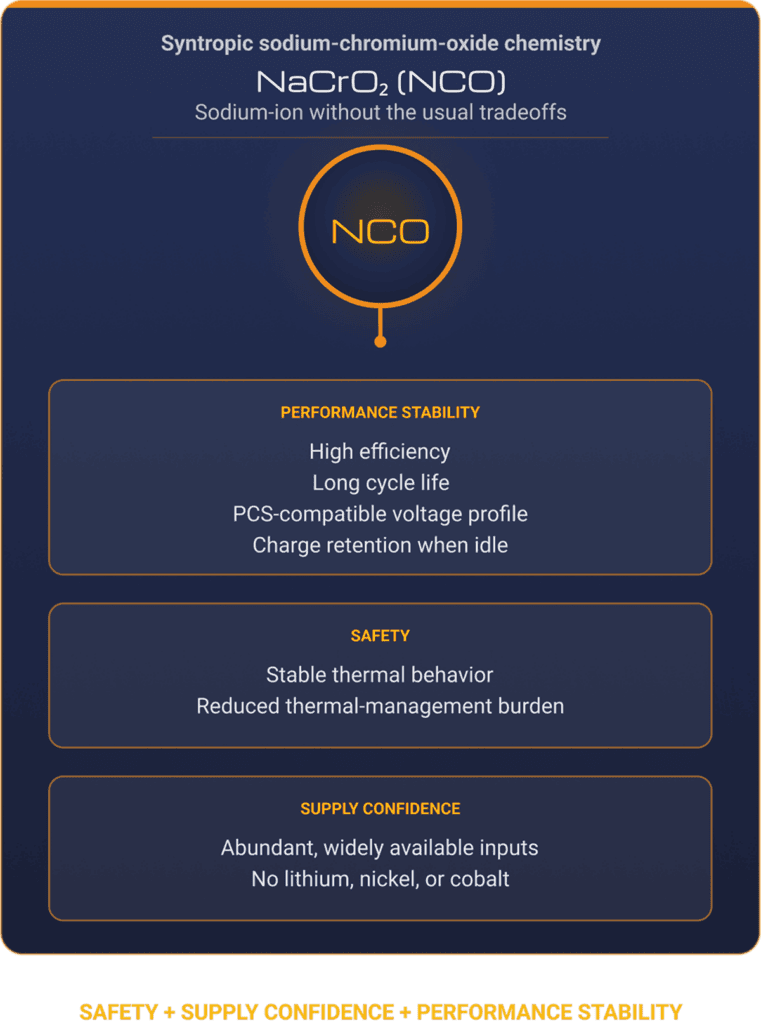
Syntropic systems are built on sodium-chromium-oxide chemistry, NaCrO₂ (NCO), a sodium-ion chemistry designed for long-life stationary storage.
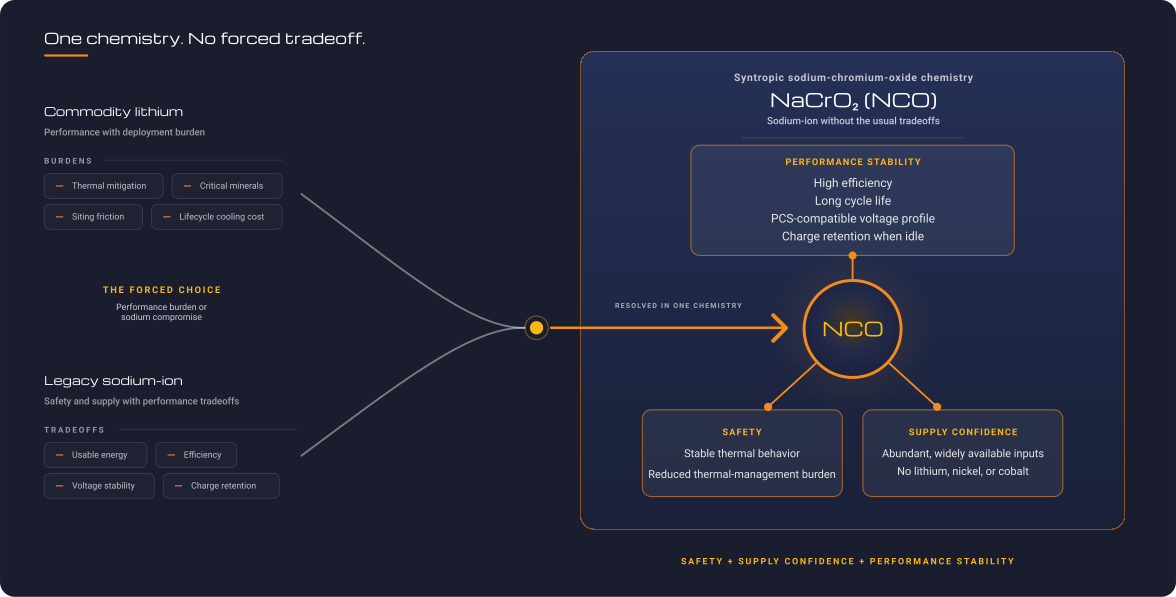
NCO preserves the safety and supply advantages of sodium-ion while addressing the performance tradeoffs that limit other sodium chemistries: usable energy, efficiency, voltage stability, and charge retention.
One chemistry. No forced tradeoff.
Our chemistry uses only trivalent chromium (Cr III), a low-toxicity form distinctly different from carcinogenic hexavalent chromium (Cr VI).
Abuse Test Video
Thermal Behavior Under Severe Abuse
Conducted by KULR, this direct-heating test compares a 210 Ah sodium-chromium-oxide (NCO) prismatic cell with a same-dimension commercial LFP cell.The NCO cell vented without flame at approximately 400°C; the LFP cell ignited with visible flame at approximately 200°C.
Frequently Asked Questions
What makes Syntropic’s chemistry different?
Syntropic systems are built on sodium-chromium-oxide chemistry, NaCrO₂ (NCO), a sodium-ion chemistry designed to solve many of the tradeoffs that limit other storage technologies. NCO supports stable operation, high efficiency, long cycle life, strong charge retention, and reduced thermal-management burden without relying on lithium, cobalt, or nickel.
Has Syntropic’s technology been independently tested?
Yes. Syntropic’s cell chemistry has been evaluated through independent testing, including RIT performance and abuse testing. Additional RIT testing is ongoing, and system-level UL1973 and UL9540 certification pathways are in process for applicable products.
What did safety testing show about thermal runaway?
UL9540A testing is designed to push cells into thermal runaway under defined test conditions. Syntropic’s cell testing showed that extreme overcharge conditions were required to induce thermal runaway. No propagation was observed during UL9540A testing or RIT nail-penetration testing.
What is the difference between GridSpan and GridSurge?
GridSpan is Syntropic’s utility-scale DC block and default flexible-duration storage platform. GridSurge is the power-optimized configuration of GridSpan, designed for fast-response, high-cycle applications where power quality, response time, and uptime matter.
Which Syntropic solution fits my application?
The right solution depends on voltage architecture, duration, power requirements, site conditions, operating profile, and deployment constraints. GridSpan supports utility-scale flexible-duration storage; GridSurge configures GridSpan for fast-response power applications; Pillar48 supports 48V telecom and critical infrastructure backup; PillarX supports high-voltage C&I and DC-coupled applications; and Tenet is Syntropic’s residential storage platform.
How does Syntropic reduce ownership and deployment complexity?
Syntropic combines safer chemistry, SelfTherm™ passive thermal management, long-life performance, and a standards-aligned validation pathway to help reduce cooling needs, parasitic load, maintenance burden, mitigation complexity, and lifecycle cost. The goal is to give customers, AHJs, insurers, lenders, and procurement teams clearer evidence for evaluating project risk.
Is Syntropic manufacturing in the U.S.?
Syntropic’s manufacturing model combines dedicated cell supply with U.S.-based module assembly, system integration, engineering, and technical support. Tenet’s initial production will be overseas, with a defined pathway to U.S. manufacturing and non-FEOC alignment across the product portfolio targeted by the end of 2027.
HOW WE OPERATE
Built around fit, not catalog selection.
Syntropic works with customers and partners to understand the application, evaluate site and operating requirements, and identify the right storage path before a project moves forward.